

Creating Lincoln's Heritage Rose Ritual Incense Cones
"A ritual begins long before the incense is lit. It begins when we choose the herbs, grind the petals, and shape each cone with our own hands."
One of the beautiful things about making your own ritual incense is that every step becomes part of the practice.
Unlike commercially manufactured incense, which is designed for consistency and convenience, handmade incense carries something more personal. Every cone reflects the time, care, and intention that went into creating it.
During this eclipse season we've been working with Lincoln's Heritage Rose, allowing this remarkable plant to accompany us through tea, meditation, ritual, and now incense.
Today we'll transform those same rose petals into something entirely new.
Before You Begin
There is no "perfect" incense cone.
Some will be beautifully smooth.
Some may develop tiny cracks.
Some may burn a little faster than others.
Every batch teaches you something.
Allow yourself to enjoy the process rather than striving for perfection.
Equipment
You'll need:
• Dried Lincoln's Heritage Rose petals
• A coffee grinder, spice grinder, or mortar and pestle
• Small mixing bowl
• Measuring spoons
• Distilled or filtered water
• Wax paper or parchment paper
• Gloves (optional)
Preparing the Rose
The finer the powder, the better your incense will burn.
Using a coffee grinder or spice grinder dedicated to herbs, grind the dried rose petals until they become a very fine powder.
If using a mortar and pestle, this process simply takes a little longer.
You may wish to sift the finished powder through a fine mesh strainer to remove larger pieces.
The remaining powder should feel soft and almost flour-like.
Two Ways to Create Ritual Incense Cones
There are many traditional incense recipes throughout the world.
Today I'd like to introduce two methods.
The first is the traditional approach using Makko powder, while the second uses cornstarch, making it easy to begin with ingredients many people already have at home.
Both methods produce beautiful incense.
The difference is simply in how the cones hold together and burn.
Method One
Traditional Makko Incense
Makko powder has been used in Japanese incense making for generations.
Made from the bark of trees in the Machilus genus, it serves two important purposes.
First, it binds the powdered herbs together.
Second, it provides a slow, even burn.
If you discover that you enjoy making incense regularly, I highly recommend keeping Makko powder in your apothecary.
It is inexpensive, lasts a long time, and can easily be ordered online.
Ingredients
2 tablespoons finely powdered rose petals
1 tablespoon Makko powder
Distilled water (added slowly)
Instructions
Combine the rose powder and Makko powder thoroughly before adding any water.
Using a small spoon or spray bottle, slowly add distilled water while mixing continuously.
You're looking for the consistency of soft clay or fresh bread dough.
The mixture should hold together when gently squeezed but shouldn't feel sticky or wet.
Forming the Cones
Roll a small amount of mixture into a ball about the size of a marble.
Place it onto parchment paper.
Using your fingers, gently taper the top into a cone.
Aim for cones approximately 1 inch tall.
Uniform size helps them dry and burn consistently.
Drying
Allow the cones to dry naturally in a cool, well-ventilated room.
Depending on humidity, this usually takes three to seven days.
Rotate them every day or two to encourage even drying.
Only burn the cones once they are completely dry.
Method Two
Cornstarch Incense
Perhaps you don't have Makko powder. That's perfectly okay. One of my goals with Everything is Energy Apothecary is to make herbal practice accessible. If you have rose petals and cornstarch, you already have everything you need to begin learning.
Ingredients
2 tablespoons powdered rose petals
1 teaspoon cornstarch
Warm water
Instructions
Combine the powdered rose petals and cornstarch thoroughly.
Slowly add warm water until the mixture becomes moldable.
This recipe often requires slightly less water than the Makko version.
Work slowly.
It's easier to add more water than to remove it.
Expect Imperfection
Cornstarch behaves differently than Makko.
As your cones dry they may develop tiny cracks.
This is completely normal.
They generally still burn beautifully.
Think of this as a wonderful practice recipe—a way to gain confidence before deciding whether you'd like to invest in Makko powder later.
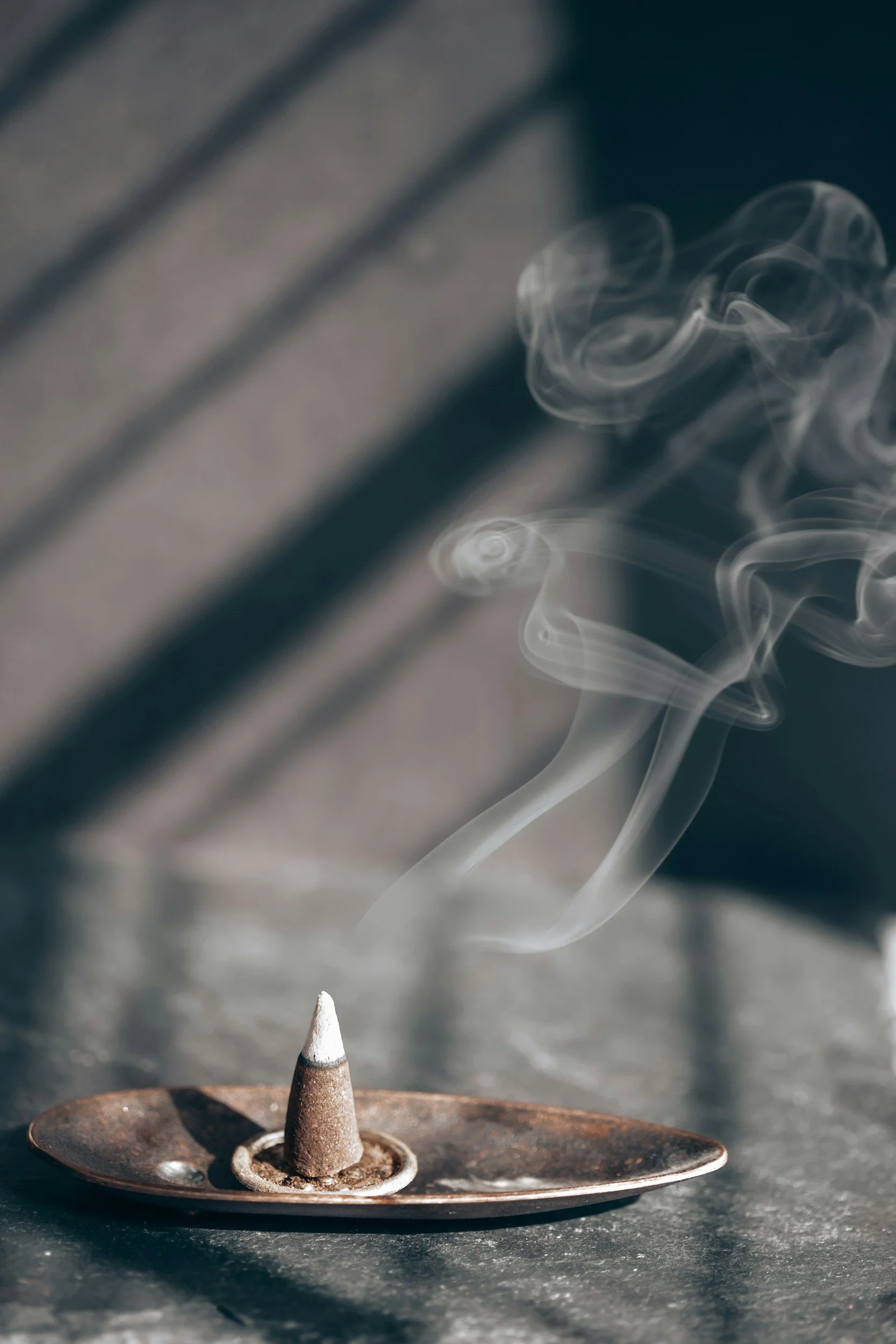
Lighting Your Incense
Always burn incense on a fireproof dish or ceramic surface.
Allow plenty of ventilation.
Never leave burning incense unattended.
If the cone extinguishes itself, it may simply need additional drying time.
Infusing Your Cones with Intention
One of my favorite moments comes while shaping the cones. Rather than rushing, pause. Take one slow breath.
Ask yourself:
What quality am I inviting into my life during this eclipse season?
Perhaps... Peace. Trust. Creativity. Compassion. Courage.
Allow that intention to accompany your hands as you shape each cone. When you later light the incense, you're not simply burning herbs. You're returning to a promise you made to yourself.
Living with the Herb
Over the coming weeks, choose one evening each week to prepare a cup of Lincoln's Heritage Rose tea before lighting one of your handmade incense cones.
Allow both the tea and the fragrance to become companions for quiet reflection.
Notice what thoughts arise.
Notice what dreams emerge.
Notice what is gently asking to be released.
This is the deeper invitation of herbal ritual—not simply to make something beautiful, but to cultivate an ongoing relationship with the plants, the seasons, and ourselves.